The Oral Histories of Student Activism project began during the 2024-25 academic year as a research project organized by BCRW’s post-baccalaureate fellow, Kelsey Kitzke ‘23, and developed in collaboration with BCRW staff and undergraduate research assistants. BCRW staff and INCITE at Columbia provided formal training in research methods that allowed the student research team to gain experience with oral history interviewing, archival research, transcription, copyediting, and the ethical and methodological questions involved in documenting recent histories. The project reflects BCRW’s longstanding commitment to feminist research as a collaborative and pedagogical practice, one through which students participate directly in the production and preservation of knowledge.
For more than fifty years, BCRW has brought scholarship into conversation with the political struggles that shape feminist thought, creating space to study how movements transform institutions and how institutions shape what political change is possible. Researching histories of student organizing at Barnard and Columbia extends this tradition by treating student movements as an important part of the intellectual and institutional history of the university. At a moment when histories of institutional change can easily be forgotten or obscured, preserving these histories creates a record of how students understood the conditions they confronted and the forms of collective action through which they sought to change the university.
Introduction
This project began with the desire to capture the rich student organizing history of Barnard College and Columbia University for present and future student organizers. For those of us who have called ourselves students of these institutions, this is a history that we know of in the vague terms it’s often referenced—but not a history that we know in any specificity. We arrive fresh-faced with the sense that big things once happened here, and we leave four years later often without any deeper sense of how big things happened here. This dearth of specific, textured organizing knowledge and memory is especially harmful to student organizers challenging institutional power. Organizers need knowledge of institutional power, sustainable internal infrastructure, and inner- and outer-institutional strategies and tactics for resistance and transformation. These things are needed by organizers of all kinds, but they are especially needed in an organizing community that experiences rapid turnover and, therefore, a short generational memory.
The liberatory student organizing histories that remain, frequently inside institutional archives, often have their transformative potential diluted into liberal, reformist politics. Change can appear as the passive result of historical “progress” while the strategies, tactics, and “housework” that made that change happen disappear. Yet, institutional archives are capable of preserving our student organizing histories over time, which can ensure accessibility for future students and other inner-institutional researchers and organizers. How can we create and maintain an organizing archive distant enough from the institution to resist dilution but close enough to remain accessible to those within and beside the institutions they seek to transform?
We believe that oral history can be one tool for movement building against a current of rising authoritarianism and lost organizing memory. While oral history is a means of knowledge production, memory preservation, and the telling of marginalized stories, the current project uses oral history for knowledge transfer above all else: moving organizing knowledge from one generation to the next, from one movement to another where archival or relational bridges do not exist. Oral history makes for an especially durable and capacious method of knowledge transfer. Simple transcripts and audio files can hold the moment’s global, local, and institutional context; nuanced explanations of the constraints and opportunities organizers faced; and details of decision-making, internal structure, and conflict resolution—all at once and in perpetuity. Though each oral history relies on a single person’s memory, as faulty and skewed as memory often is—when taken in collective, they are a powerful method of sharing knowledge of institutional power and how to work within, around, and against it for transformative change.
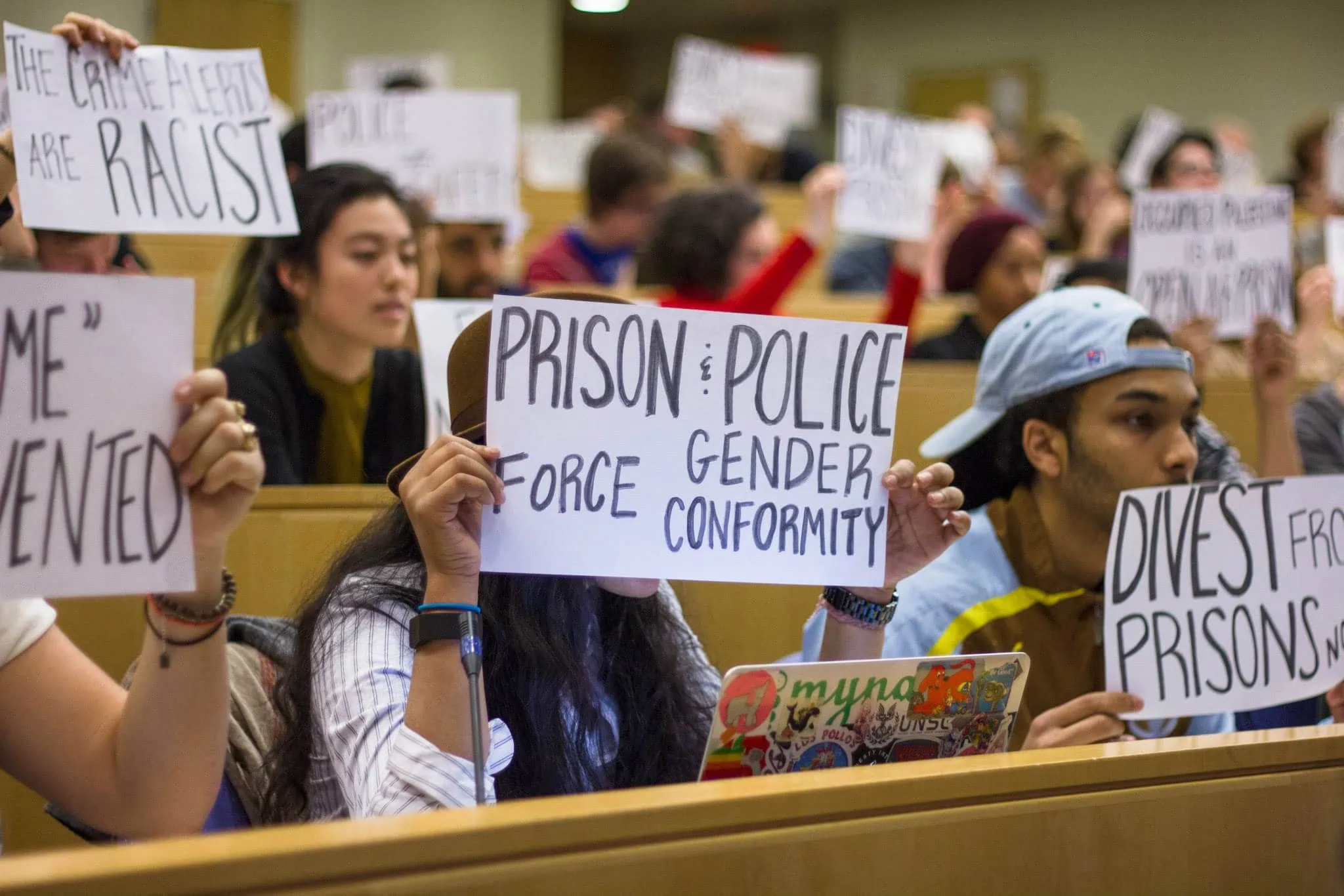
In the 2024-25 academic year, the BCRW staff, students, and affiliates on the project team began oral history collection with past organizers from the Columbia Prison Divest (CPD) campaign of 2014-15. CPD successfully fought for Columbia’s divestment from two major private prison corporations: G4S and Corrections Corporation of America (now CoreCivic). Student movement histories that focus on global systems of racial capitalism (like the prison industrial complex) brought down to an actionable scale (like a divestment campaign) are closer to our present moment than we are sometimes aware.
The oral histories from CPD organizers revealed a rich, yet-to-be-fully-documented history of student movements in the 2010s, a time of consolidating neoliberalism at the University and social consciousness raising around anti-Blackness, sexual violence, wealth consolidation, and more. Since then, student research assistants have continued collecting oral histories from movements of the 2010s, expanding beyond the initial focus on CPD.
Institutional power does not remain the same as it did a decade ago, and in fact continues to rapidly shift and consolidate. Yet the present moment in higher education demands the preservation of counter-institutional knowledge and memory for current and future generations who fight for a liberated university in a liberated world. As students and future research assistants continue to confront consolidating authoritarianism on campus and in the world, the project hopes to be a living archive, available to all students as a storage unit, meeting space, or classroom for urgent contemporary questions and enduring usable pasts.
— Kelsey Kitzke BC’23, Spring 2026
Image credit: Columbia Prison Divest, Facebook page, 2015.
How to Do an Oral History of Student Organizing