
Navigating Neoliberalism in the Academy, Nonprofits, and Beyond

This issue of S&F Online looks at the nonprofit and the university as two key sites in which neoliberal social and economic formations are constituted and contested. Emerging out of a 2009 meeting at the American Studies Association Annual Meeting convened by Munshi and Willse and drawing on the theoretical and historical models articulated by INCITE! Women, Gender Non-conforming, and Trans People of Color Against Violence, the collection asks: What are the possibilities for transformative politics given the capacity of neoliberal capital to incorporate, absorb and/or neutralize demands for social justice?
Annual Report 2013-2015

Report of BCRW accomplishments from Fall 2013 – Spring 2015.
The Worlds of Ntozake Shange

“The Worlds of Ntozake Shange” highlights Shange’s centrality to black feminism and the continuing impact of her work both within and outside the academy. In addition to working as a poet, novelist, and choreographer, Shange created the choreopoem, a form that links the physicality of dancing and music to the written word. The contributors in this issue examine Shange’s continuing impact on literature, theatre, popular culture, feminist, afrodiasporic and queer movements, with many pointing to her linguistic innovations (for instance, her fluid movement across languages, prominent use of both slashes and lowercase letters) as tools that have proven vital to feminist practice. The “Worlds of Ntozake Shange” draws necessary attention to the fact that this artist has long been a creative force, providing new language and possibilities for both intellectual and artistic productions.
Feminism, Gender Justice, and Trans-Inclusion
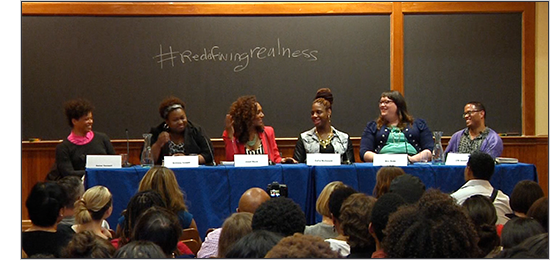
Supporting trans-inclusive admissions at Barnard.
Activism and the Academy

This issue is organized around continuing the conversations that took place between scholars, activists, and scholar/activists at these conferences. In their writing, the contributors take up the discussions begun at the panels and included here in video, so as to shed light on the complexity of oppressions in the current moment—and remind those committed to a more just world to celebrate the good times we’ve had, and imagine those we might create.
Life (Un)Ltd: Feminism, Bioscience, Race

Like the symposium, this special issue foregrounds scholarship at the intersections of science and technology studies, feminist and queer studies, and race and postcolonial studies. The authors explore key questions emerging from the intensive biotechnological management of life that marks our age. Exploring the ways in which certain bodies and lands become, as they have for many centuries, the extractable material for scientific “discovery,” the authors make questions of gender, sexuality, and reproduction central to their queries.
Gender, Justice, and Neoliberal Transformations

This issue of The Scholar & Feminist Online forges new ground by weaving together issues of gender and sexuality, usually sidelined in conversations about neoliberalism, with questions of the economy and political processes. Emerging out of a 2012 international workshop on the mutual imbrication of economic, cultural, and political structures of neoliberalism with the vast changes in gendered and sexual life, “Gender, Justice, and Neoliberal Transformations” seeks new lines of inquiry to explore the extreme disparities of wealth across the globe, as well as new and old forms of social inequality.
#FemFuture: Online Revolution
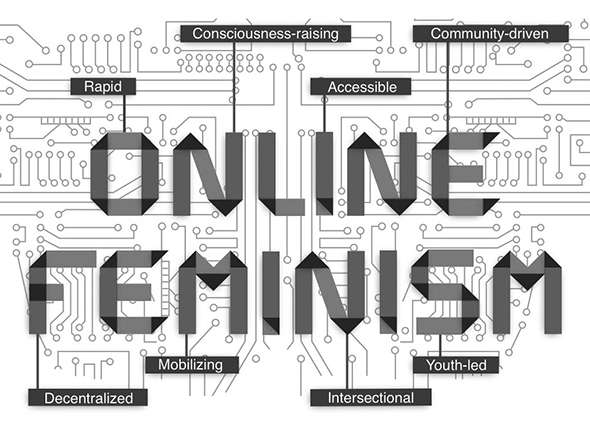
In this report, Courtney Martin and Vanessa Valenti build on a 2012 convening where 21 writers, activists, and educators who work in the online feminist landscape came together to discuss their needs, desires, and hopes for the online feminist future. Here they provide a cogent explanation of the power of online organizing, the risks and challenges of the current state of the field, and some possible solutions for creating a more sustainable system.
Feminist Media Theory: Iterations of Social Difference

Contributors include Jonathan Beller, Katrina Brown, Patricia Ticineto Clough, Dina Gadia, Cindy Gao, Marina Gržinić, Orit Halpern, Rosanna Irvine, Katie King, Deborah Levitt, Negar Mottahedeh, Roya Rastegar, Catherine Sameh, and Manuel Vason.
A New Queer Agenda

With this issue of The Scholar & Feminist Online, the Barnard Center for Research on Women celebrates our ongoing collaboration with Queers for Economic Justice. Through this partnership, we have been engaging activists, academics and organizers around a vision and practice of cross-issue organizing that sees gender and sex as central to issues like immigration, poverty, homelessness, gentrification, and drug use. “A New Queer Agenda” pushes beyond the vision of security and belonging offered through gay marriage to a broader politics of economic, political and sexual justice for all.
Religion and the Body

Contributors include Kaucyila Brooke, Ann Burlein, Lindsay Caplan, Janet R. Jakobsen, Ins Kromminga, Laura Levitt, Minoo Moallem, Carlo Quispe, Catherine Sameh, Sisters of Perpetual Indulgence, Saadia Toor, Dominic Wetzel, Melissa Wilcox, Paul Wirhun, and David Wojnarowicz.
Desiring Change

Desiring Change represents the integration of joint efforts by the Barnard Center for Research on Women (BCRW) and Queers for Economic Justice (QEJ). Desiring Change offers a framework for thinking about how desire and gender are brought alive through the ways lesbian, gay, bisexual, transgender, and intersex people use their bodies; and how desire and gender are made poignant and meaningful by the ways we construct or deny our erotic passions and gendered identities in the course of daily life. This project looks at intersections between LGBTQ and progressive politics, asking how best to integrate sex and gender into organizing around issues like immigration, the economy and social services. Desiring Change is born of the fact that in the current political moment, particularly after the financial crisis of 2008, both BCRW and QEJ see an opportunity to bring fresh vision to questions that have long challenged organizations and movements, including questions about how to frame issues of key concern and how to develop effective models for making change. We also see a longing for new possibilities, a way forward in the face of increasing inequality, and a means of keeping our desires at the center of our politics.
Critical Conceptions: Technology, Justice, and the Global Reproductive Market

Contributors include Gwendolyn Beetham, Claudia Castañeda, The Center for Bioethics and Culture, Wendy Chavkin, Jeanne Flavin, Sarah Franklin, Ana María García, Faye Ginsburg, Michele Bratcher Goodwin, Rebecca Haimowitz, Anna Harrington, Judith Helfand, Sujatha Jesudason, Rebecca Jordan-Young, Jessaca Leinaweaver, Iris Lopez, Susan Markens, Carol Mason, Faith Pennick, Rayna Rapp, Catherine Sameh, Vaishali Sinha, Debora Spar, Kalindi Vora, Catherine Waldby, and Karen Winkler.
Reproductive Justice in Action

Reproductive justice is an inclusive framework for thinking about reproductive freedoms, holistic well-being and comprehensive justice. Organizing for reproductive justice encompasses a multiplicity of issues; the individuals and networks working in this model are just as diverse in their missions, constituencies, and methods of action. Reproductive Justice in Action is the result of a collaboration between the Barnard Center for Research on Women, Groundswell’s Catalyst Fund, the New York Women’s Foundation and seventeen of their grantee partners doing reproductive justice work in New York City. Seeking to explore the ways in which these seventeen organizations think about their mission and work, we jointly embarked on a participatory action research project in order to better understand how the organizations relate to (or feel limited by) the model and language of reproductive justice.
Scholar and Feminist Online

Scholar and Feminist Online is an open-source feminist publication that, since its founding issue in 2003, has published academics, activists, and more recently, multimedia artists on topics ranging from queer agendas that center anti-racism, anti-capitalism, and trans justice, to the literary and political legacy of Black feminist poet, playwright, and choreographer Ntozake Shange. The journal’s […]
New Feminist Solutions

Marking the newest direction in BCRW’s more than thirty-five-year-old tradition of print publication, New Feminist Solutions is a series of reports geared toward informing and inspiring activists, policy-makers and others. Each report was written in collaboration with organizations and individuals who, like BCRW, have made a concerted effort to link feminist struggles to those of racial, economic, social and global justice. The reports are based on conversations and ideas emerging from conferences held at Barnard College, and are published in conjunction with websites featuring additional information from these events. Copies of the reports are free. They can be downloaded from the New Feminist Solutions website. Print copies can be requested by emailing bcrw@barnard.edu.
What Is: Key Terms in Feminist Studies

BCRW has produced a series of videos for use in the classroom that explain concepts and keywords used in social justice feminism, including: Feminism; Reproductive Justice; Neoliberalism; and STEAM: Science, Technology, Engineering, Math (STEM) + the Arts.
BCRW Blog

Part of our ever-evolving digital presence, the BCRW Blog aims to create an online space that can expand the important conversations happening at the Center, complement our programming, and feature thoughtful reflections on feminist issues of the day. A participatory platform, the Blog invites comments and submissions, allowing for timely and varied conversations with members of the BCRW community near and far. With the Blog, we hope to increase ties among diverse groups of women and develop new venues to encourage the open sharing of feminist ideas and action.
Valuing Domestic Work
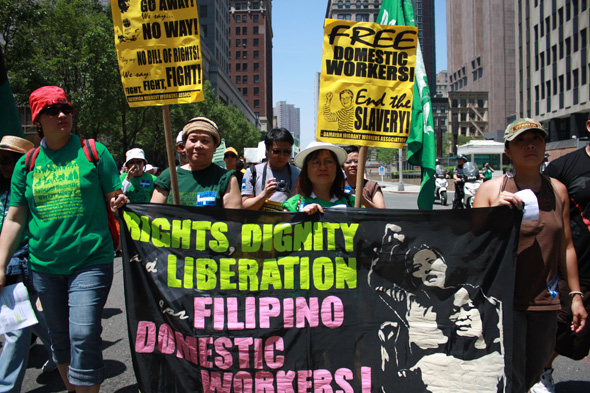
Domestic work—the daily maintenance of households and the labor of caring for children and other dependents—is crucial work. It enables workers to go out into the world, reproduces a new generation of workers and citizens, and sustains relationships among parents, children and families. And yet, it is devalued, degraded and made invisible. Its degradation and invisibility are produced through processes of gendering that naturalize domestic and caring labors as women’s work, and racialization that naturalize low-wage, “dirty” jobs as the work of people of color and immigrants. As laborers doing devalued work, domestic workers receive neither adequate wages nor any of the other legal protections many US workers have—sick leave, time off, and collective bargaining. In New York and nationally, workers have organized for better wages, humane treatment and the right to legal protections that cover other US workers.
Towards a Vision of Sexual and Economic Justice
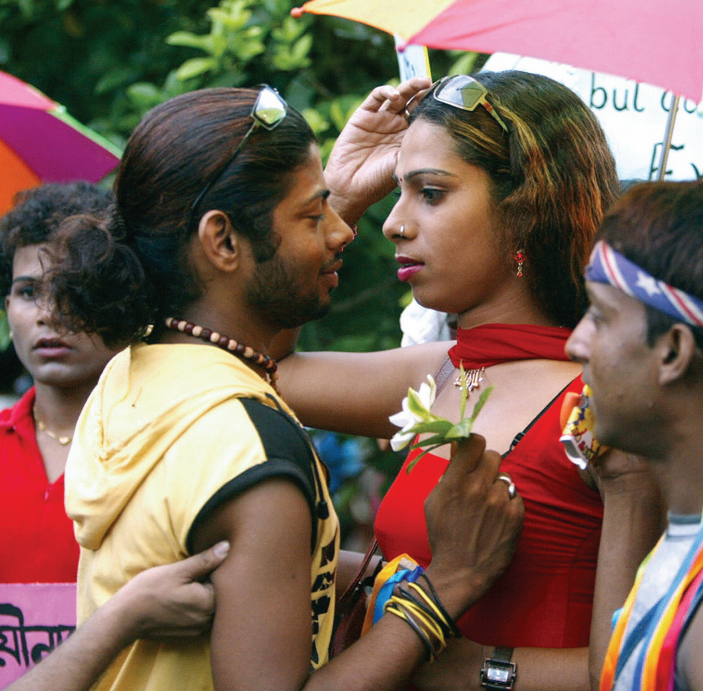
Sexual oppression and economic oppression are inextricably linked, but the movements and theoretical frameworks that address each of these issues so often treat them as discrete. Contemporary movements for global economic justice tend to shy away from sexuality issues, while campaigns for sexual rights rarely foreground economic concerns. In some spheres, however, the gap is beginning to close. BCRW highlights these potential intersections with its new project entitled Towards a Vision of Sexual and Economic Justice.
The Work-Family Dilemma: A Better Balance

Recognizing the need for a forum to discuss work-family issues that focused on issues across the economic spectrum, A Better Balance: The Work and Family Legal Center and The Barnard Center for Research on Women, along with the Center for WorkLife Law at the University of California at Hastings, and the Barnard College Center for Toddler Development, planned a summit bringing together leaders and experts (those who have studied these issues and those who advocate for better policies) and the actual stakeholders (labor, business and elected officials in New York City).
Polyphonic Feminisms: Acting in Concert

Contributors include Sara Ahmed, Anida Yoeu Ali, Moya Bailey, Lina Bertucci, Adrienne Maree Brown, brownfemipower, Nuala Cabral, Lindsay Caplan, Joy Castro, Lisa Factora-Borchers, Daniel Horowitz Garcia, Alexis Pauline Gumbs, Duchess Harris, Jessica Hoffmann, Julie Kubala, Nomy Lamm, Noemi Y. Molitor, Felicia “Fe” Montes, Jennifer C. Nash, Adele Nieves, Lesleigh J. Owen, Cara Page, Jasmeen Patheja, Marta Sanchez, Larissa Sansour, Lamont Sims, SPEAK! Radical Women of Color Media Collective, Mandy Van Deven, and Mary Jane Villamor.
Women, Work, and the Academy: Strategies for Responding to ‘Post-Civil Rights Era’ Gender Discrimination
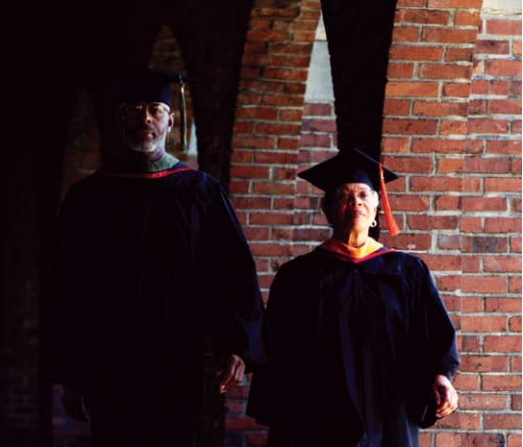
This report is based on the Virginia C. Gildersleeve Conference at the Barnard Center for Research on Women, with keynote speakers Nancy Hopkins, Claude Steele, and Virginia Valian. The participants in this conference have all made significant contributions to our understanding of the situation women currently face in academia, highlighting the effects of a diffuse set of barriers to women’s participation: small-scale, often unintended differences in recognition, support and response that can generate large-scale differences in outcomes for women. This conference was organized so as to take stock of the extant research and interventions and to chart a course forward.
Children of Incarcerated Parents

Contributors include Ann Adalist-Estrin, asha bandele, Nell Bernstein, Stacey Bouchet, Creasie Finney Hairston, Denise Johnston, Tanya Krupat, Carrie Levy, Venezia Michalsen, Dee Ann Newell, Megan Sullivan, and Angie Vachio.
Valuing Domestic Work
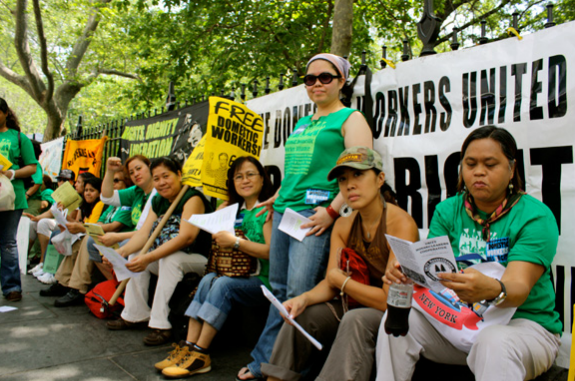
Contributors include Eileen Boris, Christine E. Bose, Arlie Russell Hochschild, Jews for Racial and Economic Justice, Jennifer Klein, Wendy Kozol, Pei-Chia Lan, Premilla Nadasen, National Domestic Workers Alliance, Leah Obias, Ai-jen Poo, Saskia Sassen, Third World Newsreel, and Basia Winograd.
Responding to Violence, Rethinking Security: Policy Alternatives for Building Human Security
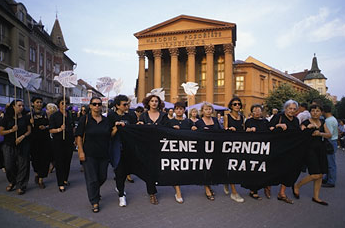
In the fall of 2002, the Center hosted Responding to Violence, a conference that brought together over twenty activists and academics whose work focused on developing alternatives to violence. In addition to a public lecture by Nobel Peace Laureate Jody Williams and a workshop with experts on responding to violence around the world, the conference generated a number of exciting projects, including the book Interventions co-edited by Elizabeth A. Castelli and Janet R. Jakobsen, Issue 2.2 of The Scholar & Feminist Online and the first report of the New Feminist Solutions series.
Toward a Vision of Sexual and Economic Justice

Contributors include Kate Bedford, Jon Binnie, Erika Bornová, Laura Briggs, Ann Cammett, Lisa Duggan, fierce pussy, Mary Margaret Fonow, Suzanne Franzway, Chitra Ganesh, Deborah Grant, Josephine Ho, Janet Jakobsen, Naomi Klein, Esperanza Mayobre, Mandisa Mbali, Carrie Moyer, Martina Pachmanová, Sheila Pepe, Svati Shah, Anna Marie Smith, Neferti Tadiar, Michalene Thomas, Fatimah Tuggar, Katerina Vincourova, and Ara Wilson.
Rewriting Dispersal: Africana Gender Studies

Contributors include Nafeesah Allen, Christina Ama Ata Aidoo, Jackee Budesta Batanda, Makini Boothe, Gabri Christa, Yvette Christiansë, Christine Cynn, Angela Davis, Lani Guinier, Kim F. Hall, Werewere Liking, Amina Mama, Celia E. Naylor, Tavia Nyong’o, Hiram Perez, Keisha-Khan Y. Perry, and Kathryn Tobin.
Gender on Ice

Contributors include Anne Aghion, Subhankar Banerjee, Lisa Bloom, Joyce Campbell, Chris Cuomo, Wendy Eisner, Elena Glasberg, Sherrill Grace, Barbara Hillary, Kenneth Hinkel, Andrea Juan, Isaac Julien, Laura Kay, An-My Lê, Heidi Lim, Jane Marsching, DJ Spooky (Paul Miller), Anne Noble, Gísli Pálsson, Andrea Polli, Annie Pootoogook, Lisa Rand, Connie Samaras, Mary Simon, Gabrielle Walker, and Marina Zurkow.
Women in the Workforce

Women have always contributed to the workforce in formal and informal ways, but their labor has not always been recognized. Karl Marx stated that
“[women’s] labor appears to be a personal service outside of capital.” From the social issues concerning sexual harassment to the policy reforms surrounding the wage gap, this exhibit showcases a variety of materials from the BCRW collection that relate to women’s participation in the workforce. These documents chronologically span three decades, starting in the early 1970s with documents from MIT’s significant conference “Women in Science and Technology,” which sparked a discussion of women in higher education and skilled professions, to materials that showcase 1990s women-run, women-owned businesses.