
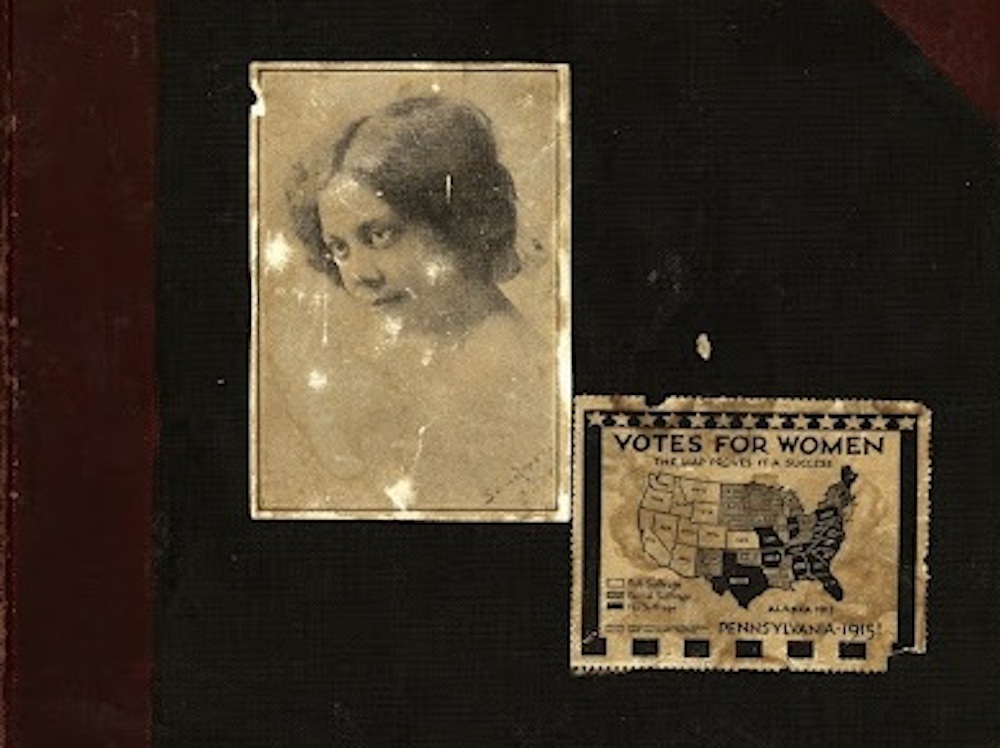
How do you save and share media? Do you have a Pinterest page for pinning images you like? Perhaps a Tumblr for reblogging others’ posts? Maybe you just add links to articles you found particularly poignant to your Bookmarks on Google Chrome. Indeed, with today’s technology, there are myriad ways to experience, share and hold on to media, be it articles, videos, pictures or something else entirely. While the technology we use to do these things has evolved rapidly over the past twenty years, saving and compiling articles and publications (a la Buzzfeed) goes back to before the computer was even invented and can be found in nineteenth century use of scrapbooks.

On Tuesday, March 5, the BCRW hosted English Professor and Historian Ellen Gruber Garvey for a presentation entitled, “Strategic Scrapbooks: 19th Century Activists Remake the Newspaper for African American History and Women’s Rights.” Garvey shared with attendees the research for her most recent book, “Writing With Scissors: American Scrapbooks from the Civil War to the Harlem Renaissance.” Going into this panel, I could hardly conceptualize what a strategic scrapbook would look like; my associations with scrapbooks were ones of family photos, personal letters and cute photo corners. As it turns out, in the nineteenth century, scrapbooking was an incredibly common and popular form of documenting and circulating information and ideas, and primarily consisted of cutting and pasting newspaper clippings into any sort of book that was no longer needed. In this way, people of this era documented war happenings, obituaries, articles, poetry and more while curating their own versions of the press in order to remember and share responses to media.
http://www.tb-credit.ru/zaim-bez-otkaza.html http://www.tb-credit.ru/contact.html